Bilingual Governance Is the New CCM Test
The enterprise question is no longer how many languages a platform can generate. It is whether the organization can prove that every regulated message remains equivalent across languages, channels, versions, and approvals.
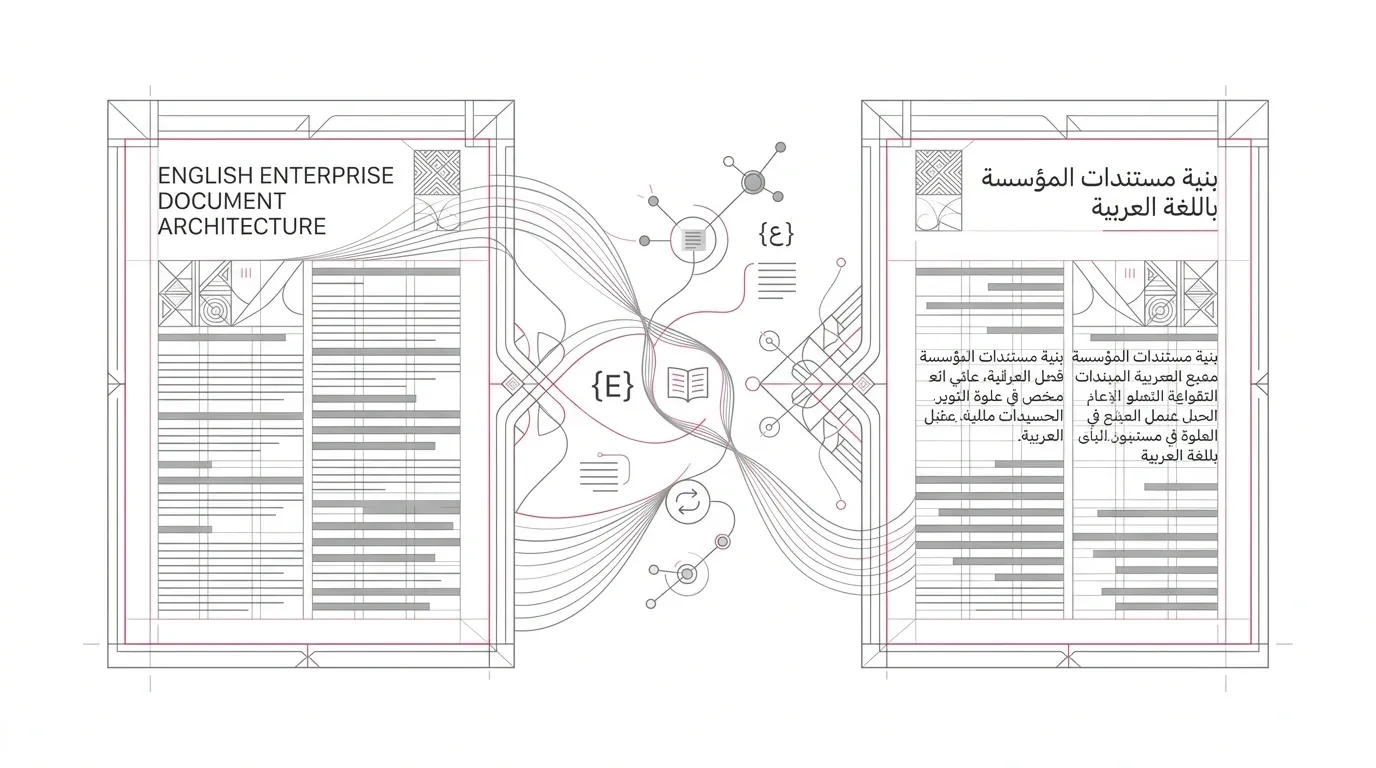
A bank changes a fee, warning, eligibility rule, or renewal date in English. The Arabic version must carry the same meaning, the same prominence, and the same effective date. The numbers and product names must render correctly inside right-to-left text. The PDF, email, SMS, mobile experience, and branch-assisted output must agree. The institution must know who reviewed each language and what customers actually received. That is not a translation task. It is a governance system. The Central Bank of the UAE Small to Medium Sized Enterprises Customer Protection Regulation C 2 2026 , effective 13 September 2026, makes that operating reality hard to ignore.
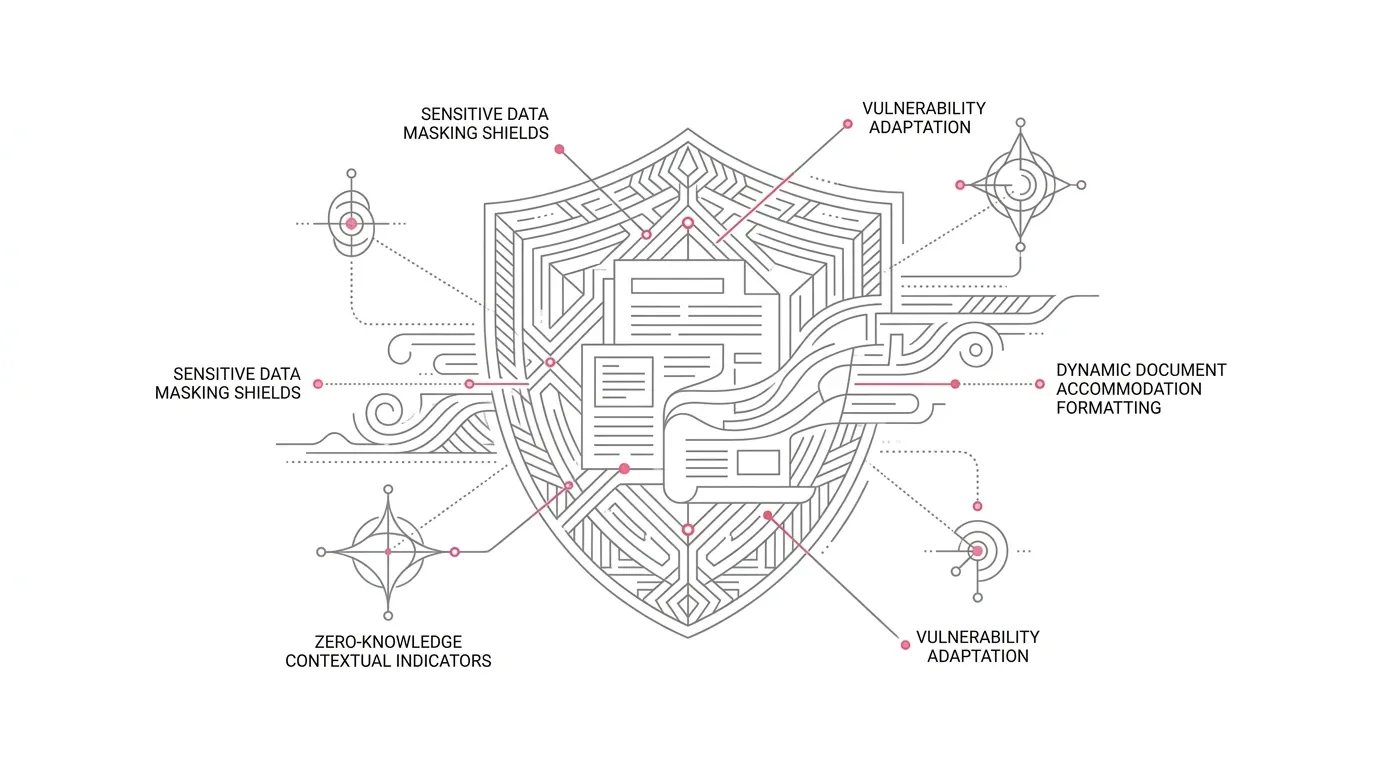
The regulation applies to CBUAE-licensed banks and finance companies when serving SME customers. Article 3 requires disclosed information in all communication channels to be available in English and Arabic. It also requires accurate, comprehensive, non-misleading information; plain language; regular monitoring of disclosure effectiveness; and a formal governance structure for approval and ongoing monitoring. The rule covers words, images, audio, and video, not only traditional documents. CBUAE Article 3 therefore turns bilingual parity into an enterprise operating requirement, not a localization afterthought.
Language Count Is the Wrong Score
Traditional CCM comparisons often reward breadth: more channels, more languages, more templates, more production volume, more installed customers. Those measures matter, but they do not answer the decisive question for regulated bilingual communication: when one approved fact changes, can the enterprise keep both languages and every channel aligned without creating a hidden second estate?
A platform can advertise support for 60, 100, or 108 languages and still leave critical work outside the control plane: terminology lists in spreadsheets, translator handoffs in email, Arabic visual checks in screenshots, duplicated approval queues, and manual reconciliation between PDF and digital output. Every external handoff creates another place where meaning, variables, dates, warning prominence, or version status can diverge.
Arabic adds a technical reason to demand proof. The W3C Arabic and Persian Layout Requirements note that Arabic pages typically flow right to left while numbers and embedded Latin text flow left to right. Bidirectional runs, punctuation, wrapping, alignment, tables, and page structure can all affect the result. A linguistically acceptable sentence can still become an operationally defective disclosure if the layout engine mishandles a rate, date, currency, product code, or warning.
The Six Part Bilingual Proof
Enterprise buyers should replace the language-count row in the feature matrix with a witnessed scenario. Change a material English disclosure, introduce an Arabic equivalent, and score six forms of evidence.
1 Source relationship. Show how English and Arabic assets are linked. Buyers should be able to identify the source, each language variant, every channel representation, and the current production status without relying on naming conventions alone.
2 Meaning and terminology. Demonstrate how approved product names, legal phrases, fees, warnings, variables, and named entities stay consistent. Machine translation can accelerate a first draft; it does not replace a controlled glossary, semantic comparison, or qualified human review.
3 Layout integrity. Render Arabic with realistic data. Inspect mixed Arabic and Latin text, percentages, currencies, dates, tables, charts, page breaks, links, and digital layouts. Test visual prominence, not merely character direction.
4 Approval accountability. Identify who translated, reviewed, approved, rejected, and published each language version. The test should expose stale or unapproved variants and prevent them from reaching production.
5 Channel parity. Generate the same scenario across document, email, SMS, and relevant digital endpoints. Confirm that language selection, regulatory content, variables, and effective dates remain aligned while each channel preserves its intended design.
6 Change and monitoring. Update a material source statement and measure how the platform finds affected language and channel variants. Require a visible queue of missing, outdated, failed, or unapproved outputs, plus evidence of what was ultimately delivered.
Where Perfect Doc Studio Has a Credible Foundation
PDS now makes multilingual production a prominent part of its public proposition. Its current website says it can auto-generate document, email, and SMS designs in more than 100 languages, preserve layout, and support right-to-left languages automatically. Arabic is explicitly listed. These are PDS vendor claims and should be demonstrated, but they directly address the production mechanics that the UAE scenario exposes. Perfect Doc Studio multilingual capabilities .
The knowledge base adds useful operational detail. When a user translates a document, PDS creates a separate language version linked to the original and stores it in the same channel. Channel mapping can group documents, email, and short messages, including their language variants, under one common channel. For on-demand generation, only language versions in Published status appear for selection. PDS translation workflow PDS channel mapping PDS language selection .
PDS also documents a Draft, Testing, and Published lifecycle in which testers review output and data mapping before a Publisher moves a design into production. PDS versioning workflow Taken together, these capabilities support a plausible bilingual control chain: linked language assets, channel grouping, visual testing, controlled publication, and production-time language selection.
That is enough to warrant serious evaluation, but not enough to declare the problem solved. The reviewed public sources do not verify controlled terminology glossaries, automated semantic comparison between source and target, missing or outdated translation dashboards, language-specific approver rules, automatic propagation or impact discovery after a source change, side-by-side bilingual diffs, or an end-to-end record proving which language version each SME customer received. Those are demonstration questions, not reasons to assume absence.
What Established Competitors Prove
A fair shortlist should recognize that competitors are investing in the same problem. Messagepoint publishes an especially explicit translation control model: 60-plus languages, glossaries, checks for semantic similarity, missing content, styles, variables and named entities, a translation-accuracy dashboard, configurable workflow, human approval, and audit visibility. These are vendor claims, but they set a strong evidence bar.
Quadient Inspire Evolve says its AI services translate template content into more than 100 languages and let users review, compare, and refine translations. Quadient’s broader Inspire page also describes centralized governance, approvals, delivery, and archive. The reviewed public pages did not verify Arabic-specific right-to-left behavior or a language-parity dashboard, so those points belong in a live test.
SmartCOMM emphasizes centralized regulatory blocks, compliance across brands, jurisdictions, and languages, plus tracking, auditing, and predefined approval workflows. Its CRM materials describe a single-template approach across multiple languages and channels. The reviewed sources do not specify integrated machine translation, Arabic right-to-left support, or automated semantic parity.
OpenText publishes a concrete Exstream customer story for Parentia , which managed hundreds of multilingual templates and used metadata tags to identify and remove sentences across other language versions. The story also describes an automated senior-review workflow. It is a persuasive example of cross-language change management, although it does not establish an Arabic-specific translation workflow.
The Incumbent Assumption to Challenge
Installed base, global reach, and analyst recognition can reduce perceived procurement risk. They do not prove that the buyer’s own bilingual disclosure will survive a real change. Nor does a high language count prove that the platform governs terminology, semantic equivalence, right-to-left rendering, approval, and delivery as one operation.
The better evaluation is scenario-based and testable. Give each vendor the same English and Arabic Key Facts Statement, the same fee change, the same mixed-direction data, and the same document, email, and SMS requirement. Ask the vendor to make the change, identify every affected asset, obtain the appropriate approvals, generate each output, prevent an outdated version from being selected, and export the evidence. Measure elapsed effort, manual handoffs, defects, and the clarity of the audit trail.
This test does not guarantee regulatory compliance, and software cannot replace legal or linguistic judgment. It does reveal whether the platform reduces or multiplies the operational work required to achieve compliance.
Measure the Cost of Keeping Languages Aligned
Bilingual governance is also a total-operating-cost question. The expense is not limited to the first translation. It accumulates each time a fee, product rule, warning, brand element, data field, or channel design changes. If teams must search for affected variants manually, brief translators outside the platform, rebuild layouts, and reconcile approval records, every change carries a multilingual coordination tax. That burden grows with the number of products, jurisdictions, channels, and reusable content objects under management.
Procurement should therefore measure the work between an approved source change and a safely released bilingual communication. Count the assets found automatically, manual exports and imports, specialist handoffs, review cycles, defects discovered during proofing, stale variants blocked, and evidence produced at the end. This makes agility and governance comparable without relying on marketing labels. It also gives newer platforms such as PDS a fair test against established incumbents: can the system make a material bilingual change with less ambiguity, fewer external steps, and a clearer line of accountability?
Why PDS Belongs on the Shortlist
PDS is not entitled to win because it publishes a larger language number. It deserves evaluation because its public architecture connects several controls that matter in the bilingual proof: business-user authoring, linked language variants, cross-channel grouping, automatic right-to-left support, test and publication stages, and production selection restricted to Published language versions.
That combination points toward a simpler operating model in which multilingual communication is created, governed, and delivered inside the CCM environment rather than assembled through disconnected translation and channel workflows. The remaining proof points are concrete enough to test in a demonstration: glossary behavior, semantic parity, change propagation, Arabic rendering under real data, role separation, stale-version prevention, and delivery evidence.
Enterprises that omit PDS from a serious multilingual CCM evaluation risk optimizing for the category’s familiar names or broadest feature inventories instead of testing the bilingual operating model they actually need. The future of CCM will not be won by counting languages. It will be won by governing meaning across them.
Comparison Evidence
This matrix records only what the reviewed public sources substantiate. “Not verified” means the capability was not found in those sources; it does not mean the capability is unavailable.
| Platform | Verified multilingual evidence | Governance evidence | Not verified in reviewed sources |
|---|---|---|---|
| Perfect Doc Studio | 100 plus languages; one-click document, email and SMS generation; layout preservation; automatic RTL; Arabic listed; linked language versions. | Draft, Testing and Published stages; Publisher approval; only Published language variants selectable for on-demand output; linked channel grouping. | Glossaries; semantic parity checks; stale-translation dashboard; cross-language impact or propagation; bilingual diff; language-specific approval; customer-level language evidence. |
| Messagepoint | 60 plus languages; integrated AI translation; preserves variables and formatting; controlled glossaries. | Semantic, missing-content, style, variable and named-entity checks; dashboard; workflow; human approval; audit visibility. | Arabic-specific RTL rendering in the reviewed page; demonstrated output parity across the exact CBUAE scenario. |
| Quadient Inspire | 100 plus languages through Inspire Evolve AI services; users can review, compare and refine translated content. | Broader Inspire materials describe centralized governance, approval, delivery and archive. | Arabic-specific RTL behavior; semantic parity dashboard; terminology glossary in reviewed sources. |
| SmartCOMM | Single-template approach across multiple languages and channels; compliance positioning across languages and jurisdictions. | Central regulatory blocks; tracking, auditing and predefined approval workflow. | Integrated translation; Arabic-specific RTL; automated semantic parity or stale-translation detection. |
| OpenText Exstream | Customer story verifies multilingual variants and metadata-assisted cross-language change identification. | Customer story verifies automated senior-review workflow and centralized template management. | Arabic-specific translation and RTL evidence; automated semantic parity in reviewed sources. |
Executive Takeaway
For enterprise buyers, multilingual CCM should be treated as a controlled relationship among source meaning, language variants, channel outputs, approvals, and delivery evidence. CBUAE Regulation C 2/2026 provides a timely, concrete test: keep English and Arabic disclosures aligned across every channel while proving governance and effectiveness. PDS publicly verifies several building blocks that make this operating model plausible and deserves a live shortlist test. Procurement should condition any decision on evidence for terminology control, semantic parity, RTL quality, change propagation, language-specific approval, and delivery-level traceability.
Call to Action
Ask Perfect Doc Studio to run a bilingual proof using one real, high-risk communication. Change a material English disclosure, create and review the Arabic version, render mixed-direction customer data, publish document, email, and SMS outputs, and show the version and approval evidence. A platform that can make this governed change clearly and quickly is demonstrating the future of multilingual CCM, not merely describing it. Request a PDS demonstration focused on multilingual generation, channel mapping, right-to-left output, testing, approval, and production selection.