A voice agent can perform perfectly in a single-use-case demo and still fail the moment it serves a second brand, region, client, or program.
The dangerous failure is not always a broken call. It can be a fluent answer drawn from the wrong knowledge base, an action executed with another business unit's credentials, a payment policy borrowed from another market, or a caller transferred to the wrong team. At enterprise scale, the hard problem is making shared infrastructure behave as if every customer context were securely and operationally separate.
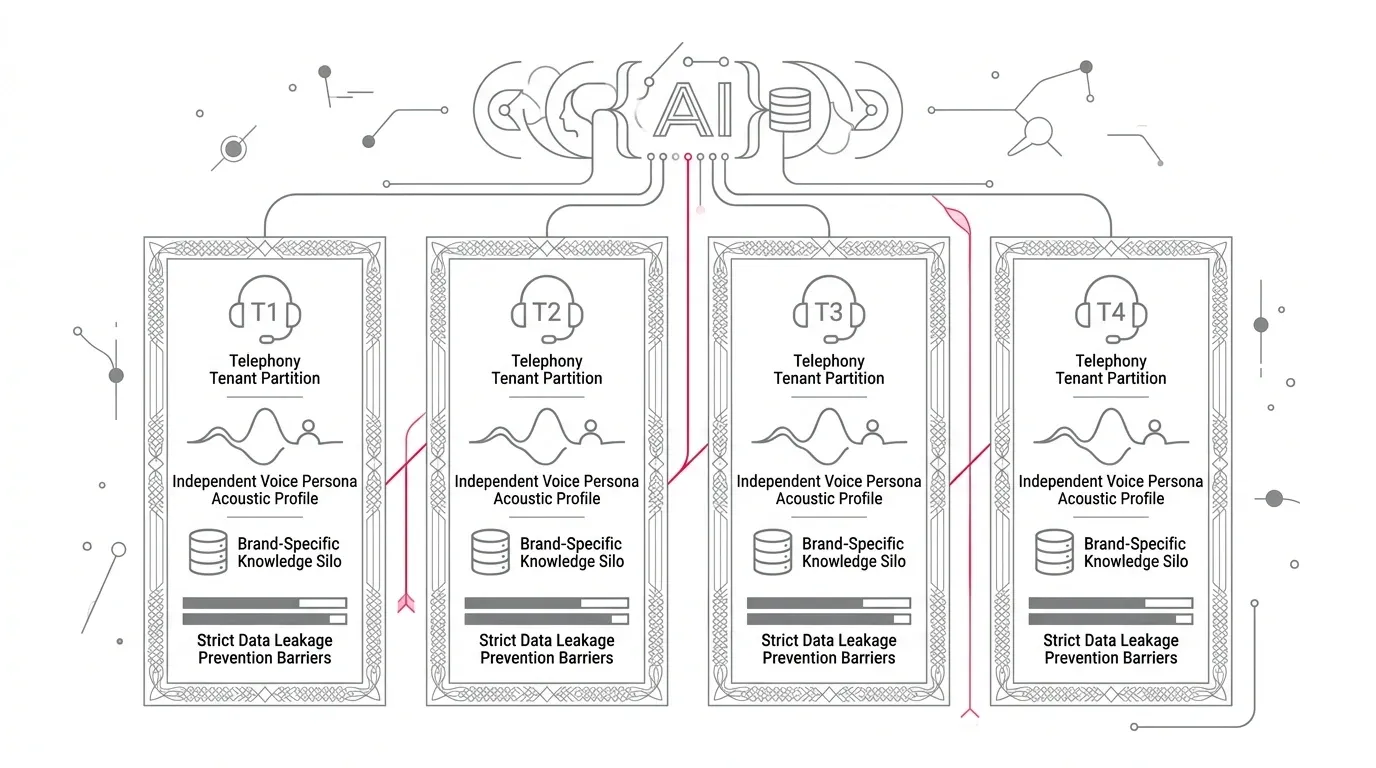
That is the purpose of multi-tenant voice AI: multiple organizational units use a common platform, while each unit's data, identity, configuration, tools, capacity, records, and policies remain bounded to the correct tenant. A tenant might be a legal entity, brand, country, department, outsourced client, member service, donor program, or helpline.
The architecture is no longer hypothetical. AWS published a client-adaptive agentic IVR pattern in October 2026 that changes prompts, tools, business rules, and escalation logic by client from a single deployment. The pattern can reduce duplication. It also concentrates risk if tenant context is weak or inconsistently enforced.
Before you scale, require evidence that the platform passes the following nine isolation tests.
What multi-tenant voice AI should and should not share
Multi-tenancy does not mean every layer must be shared. The useful design question is which capabilities benefit from centralization and which boundaries must remain distinct.
A common control plane can provide deployment standards, monitoring, policy templates, model access, and operational tooling. The live execution context may still need tenant-specific knowledge stores, credentials, encryption keys, quotas, logs, and network boundaries. Higher-risk workloads can use stronger physical or account-level separation while remaining governed through the same operating model.
| Pattern | Best fit | Primary trade-off |
|---|---|---|
| Dedicated stack per tenant | High-impact workflows, strict residency, contractual isolation, materially different systems | Strong boundary; highest duplication and operating overhead |
| Shared control plane with isolated tenant runtimes | Most enterprises scaling across brands, regions, or programs | Balanced reuse and isolation; requires disciplined automation and evidence |
| Broadly shared runtime with tenant-aware configuration | Lower-risk, highly standardized use cases | Fast onboarding; greatest dependence on flawless context propagation and controls |
AWS guidance recommends tenant-aware identity, memory, configuration, policy, and observability. Google Cloud's reference architecture similarly combines a centralized governance hub with isolated tenant projects and datastores. These patterns point to a practical principle: centralize standards, but make tenant boundaries explicit and testable.
1 Prove tenant identity before the agent speaks
Every session should resolve a tenant from trusted routing context, such as the called number, authenticated account, service line, or contract-specific entry point. Caller-provided statements alone are not a sufficient boundary for sensitive workflows.
Test ambiguous and adversarial cases: number forwarding, transferred calls, reused phone numbers, calls that arrive without expected metadata, and a caller who asks to switch brands mid-conversation. The safe result is a controlled clarification or human route, not a guessed tenant.
Acceptance evidence: a routing map, the source of tenant identity, fallback behavior, and logs showing that an unresolved tenant cannot access customer data or action tools.
2 Isolate knowledge and conversational memory
A tenant boundary must cover more than the document index. It should extend to retrieval filters, caches, embeddings, conversation history, summaries, long-term memory, and any material reused for evaluation or improvement.
Seed two test tenants with deliberately conflicting facts: different return windows, eligibility rules, branch hours, or program benefits. Ask the same question in both contexts, then try to elicit the other tenant's answer by naming it, quoting its terminology, or referring to a previous call. A passing system consistently grounds the answer in the active tenant or declines when evidence is unavailable.
3 Bind tools, credentials, and actions to the tenant
The costliest mistake may happen after the words are spoken. A voice agent that can query accounts, book appointments, update cases, initiate returns, or take payments needs tenant-scoped tools and credentials. Hiding an inappropriate tool from the prompt is not an authorization control.
Verify enforcement at the tool gateway and downstream system. Attempt to substitute another tenant ID, reuse a session token, call a disabled function, and exceed transaction limits. The system should fail closed and record the attempt. For sensitive actions, consider step-up authentication, customer confirmation, and human approval.
4 Separate prompts, policies, voices, and disclosures
Each tenant may have distinct products, terminology, tone, opening hours, languages, prohibited topics, disclosures, and escalation thresholds. Treat this configuration as versioned production code, even when business users manage it through a visual interface.
Test configuration precedence. A global update must not overwrite a stricter local policy. A tenant administrator should not be able to change another tenant's settings. Every live response should be traceable to the exact policy and prompt version used during the call.
In Europe, interactive AI transparency obligations apply from August 2, 2026. Natural voice should not be confused with concealed identity. Keep the AI disclosure clear from the start of the interaction and validate it in every language and tenant flow.
5 Contain capacity and noisy-neighbor effects
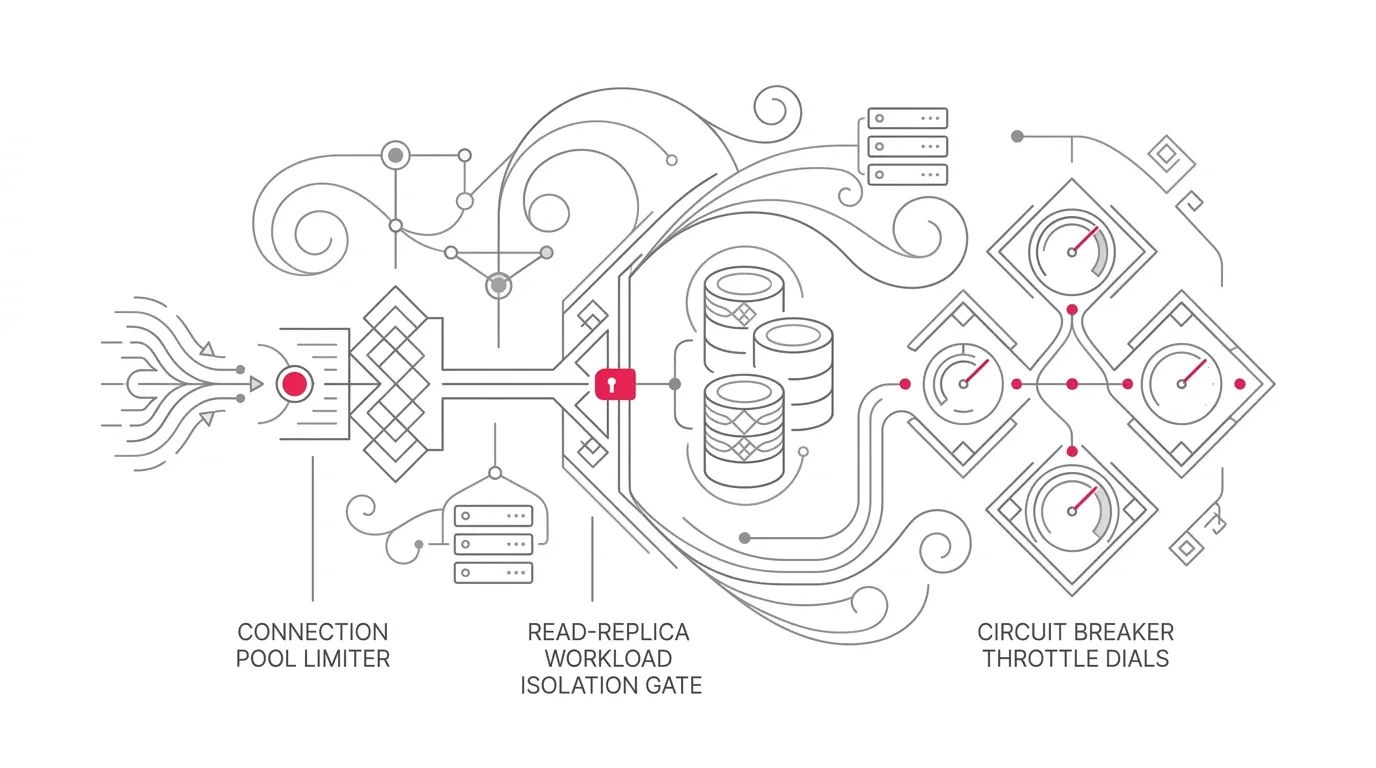
A shared platform can create a shared failure. A product recall, weather event, fundraising campaign, benefits deadline, or service outage may drive one tenant's call volume far above plan. Without quotas and priority rules, that surge can increase latency or block other tenants.
Run load tests with uneven demand, not only an average blended volume. Define tenant-level concurrency, rate limits, reserved capacity, degradation behavior, and priority queues. Executives should know which callers receive reduced functionality first and how quickly capacity can be reallocated.
6 Keep transcripts, analytics, and retention tenant-scoped
Voice interactions can create recordings, transcripts, summaries, sentiment signals, action logs, and quality scores. Each artifact needs an owner, purpose, access rule, retention period, deletion process, and regional storage decision.
The UK ICO's AI and data-protection guidance emphasizes risk-based security and data minimisation. Apply that principle at the tenant level: collect and retain what each service needs, not everything the shared platform could store. The ICO notes that this guidance is under review, so legal and privacy teams should confirm current requirements for each jurisdiction.
Test cross-tenant dashboards, exports, support access, deletion requests, and analytics joins. Aggregated enterprise reporting should use governed, minimized data rather than becoming a back door into another tenant's call records.
7 Control releases and rollback by tenant
One global release can create enterprise-wide blast radius. Separate development, test, and production environments, then decide whether new models, prompts, tools, and knowledge updates roll out globally, by cohort, or tenant by tenant.
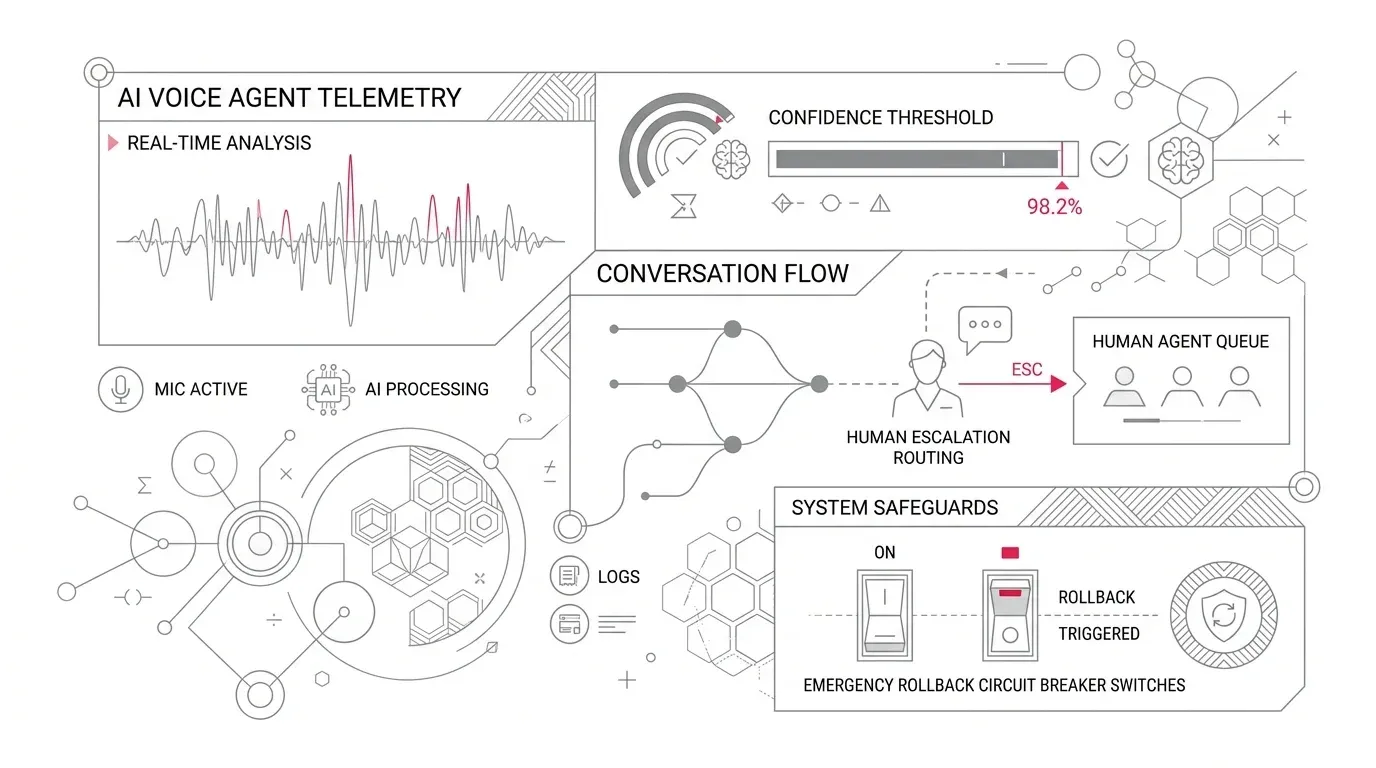
Microsoft's guidance for real-time voice agents calls for controlled promotion, pre-production checks, tracked versions, explicit publishing approval, and tested rollback. For a multi-tenant service, prove that one tenant can be paused or reverted without rolling back every other tenant.
8 Preserve the correct human handoff
Escalation is part of the tenant boundary. The agent must choose the correct queue, pass the correct case and conversation context, apply the correct service level, and avoid exposing notes or customer data to the wrong operating team.
Test handoff during ordinary calls, low-confidence responses, caller distress, authentication failure, system outage, and after-hours conditions. Confirm what happens when the intended queue is unavailable. A generic overflow route may be efficient, but it must not bypass legal, contractual, language, or safeguarding requirements.
9 Produce tenant-scoped audit evidence and incident controls
A buyer should be able to reconstruct a material call: how the tenant was selected, which identity checks passed, which knowledge was retrieved, which prompt and model versions ran, which tools were offered and called, what action occurred, and whether a human took over.
Then test containment. Can operations disable one tool, knowledge source, tenant, number, region, or model version without taking down the entire platform? Can security export evidence for one tenant without exposing another? Can the team identify every tenant affected by a faulty global component?
Auditability is not only for regulators. It is how operations, customer care, vendors, and business owners agree on what happened and prevent a repeat.
A practical two-tenant pilot scorecard
A credible proof of concept should use two tenants that are intentionally different. Choose different policies, knowledge, tools, languages, data classifications, and escalation routes. Then require evidence across the full lifecycle.
| Evidence to request | Pass condition |
|---|---|
| Tenant routing record | Every test call resolves the intended tenant or enters a safe unresolved path |
| Contradictory knowledge test | No answer, citation, or memory crosses tenants |
| Unauthorized tool attempt | The call is blocked by enforcement outside the model and logged |
| Policy and disclosure test | The correct local rules and opening disclosure run in every supported language |
| Uneven load test | One tenant's spike stays within agreed impact limits for the other |
| Transcript and export test | Access, retention, export, and deletion remain tenant-scoped |
| Tenant-only rollback | A change can be reverted for one tenant without disrupting the other |
| Handoff test | The correct human team receives the correct context and no unrelated records |
| Incident drill | Operations can contain one tenant and reconstruct the event from logs |
How YuniQ can fit the evaluation
YuniQ's AI voice agents for high-volume customer care are positioned to work with existing telephony and connect to live business systems such as CRM, booking, billing, and custom APIs. The page also describes human handoff with a conversation summary and offers a working proof of concept in 48–72 hours.
Use that POC as an evidence exercise, not simply a conversational demo. Bring two brands, regions, or programs; define their boundaries; and run the nine tests above. The outcome should be a documented architecture and risk decision: what can safely be shared, what must remain isolated, and what must be proven again before volume increases.
For nonprofit foundations, the same method applies to donor services, grant applicant support, member helplines, and community programs. Program data and safeguarding rules can differ even inside one organization. Shared technology should not erase those responsibilities.
The executive decision
Multi-tenant voice AI can replace a growing collection of duplicated flows with a more consistent operating model. The business case is strongest when reuse does not dilute accountability.
Approve scale only when the organization can answer three questions with evidence: Which tenant is this call for? What exactly can this session know and do? How quickly can we contain and reconstruct a failure? If any answer depends on the model remembering the rules, the architecture is not ready.
Frequently asked questions
What is multi-tenant voice AI
Multi-tenant voice AI is a voice-agent platform used by multiple organizational units or clients while keeping each tenant's identity, knowledge, data, tools, policies, records, and operations appropriately separated. The platform may share a control plane or infrastructure without sharing every execution resource.
Is a separate voice agent required for every brand
Not always. A shared platform with isolated tenant contexts can reduce duplication and centralize governance. Separate stacks may still be justified for high-impact workflows, contractual isolation, data residency, incompatible systems, or materially different risk profiles.
What is the biggest multi-tenant voice-agent risk
The central risk is cross-tenant context: the wrong knowledge, data, credentials, policy, record, or escalation path entering a live call. Because the response may sound fluent, these failures can be harder to notice than a conventional outage.
How should enterprises test tenant isolation
Use at least two intentionally different tenants and attempt cross-tenant routing, retrieval, tool use, configuration, logging, load, rollback, and handoff. Require enforcement evidence from identity, access, tool, data, and operational layers, not only successful conversations.
Test the boundary before you scale the call volume
A strong demo proves that a voice agent can talk. A strong enterprise POC proves that it stays inside the right business context when the conditions are messy. Request a YuniQ voice-agent POC and scope it around two tenants and the nine isolation tests in this guide.
Suggested publication note
This article provides architecture and operational guidance, not legal advice. Organizations should obtain current legal, privacy, accessibility, telecommunications, and sector-specific advice for the jurisdictions and call types in scope.