A customer receives a renewal notice that is grammatically clean, technically accessible and delivered on time. The readability score is within policy. The template passed approval. Yet the customer still cannot explain the increase, the deadline or the consequence of doing nothing. Operationally, the communication succeeded. In customer terms, it failed.
That gap now matters more than a tidy scorecard. In March 2026, the UK Financial Conduct Authority said firms should treat communication design, testing, monitoring and governance as a coherent end-to-end process. Its examples include surveys, comprehension checks, A/B testing, customer callbacks and evidence that a change actually improved understanding. The same review warned that the absence of complaints is not reliable assurance. [1]
The regulatory requirement is not simply to make language shorter. Under the Consumer Duty, communications should meet customers’ information needs, be likely to be understood and equip customers to make effective, timely and properly informed decisions. Where appropriate, firms must test communications before use, monitor their impact and correct deficiencies. The FCA’s July 2026 outcomes guidance goes further in practical terms: strong firms connect indicators to decisions, actions and proof that the intervention worked. [2] [3]
This creates a sharper procurement question for customer communications management: Can the platform participate in a repeatable comprehension-assurance loop, or does it stop at content production and delivery?
Readability Is an Input, Not an Outcome
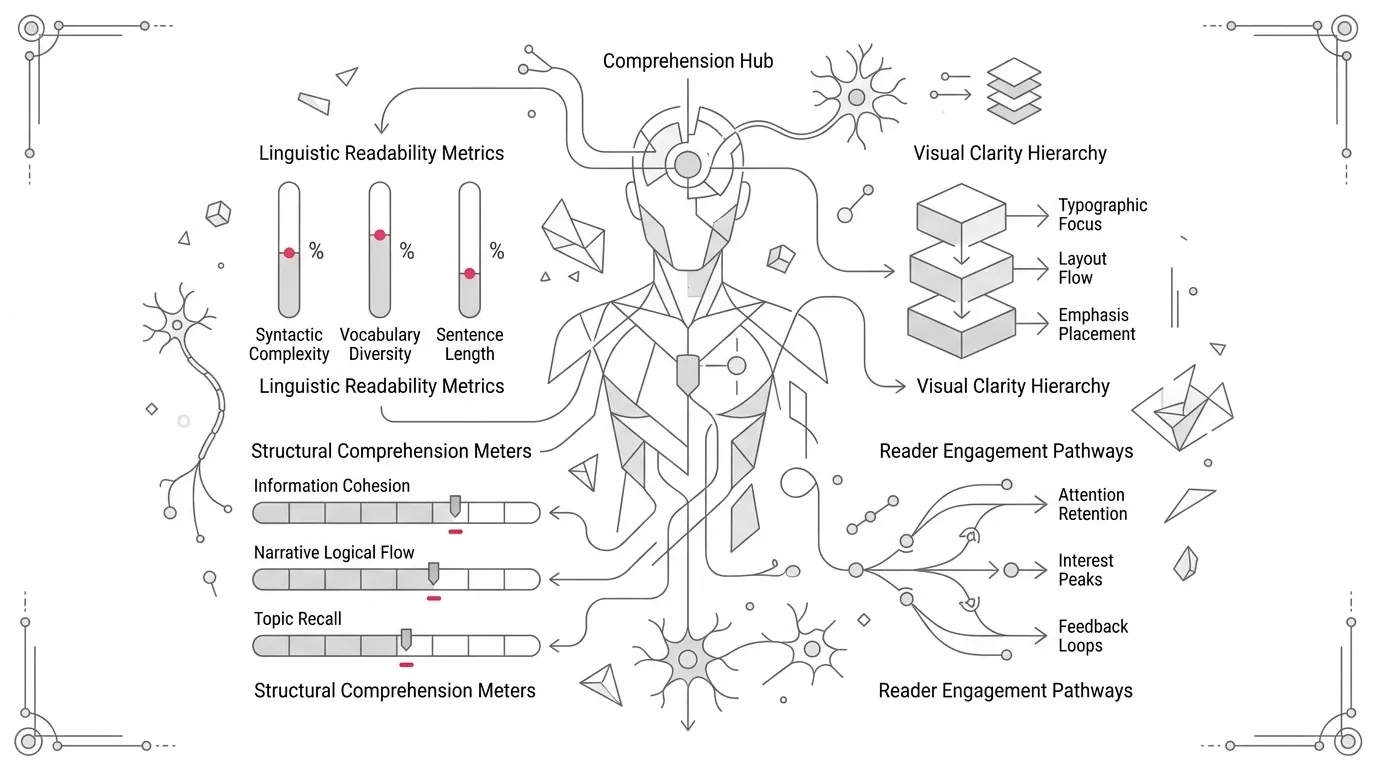
Readability scoring, plain-language guidance and AI-assisted rewriting are valuable. ISO 24495-1:2023 establishes governing principles for developing plain-language documents. Major CCM providers have invested accordingly: Messagepoint describes AI-assisted optimization for plain language, reading level, sentiment and brand alignment; Smart Communications publishes real-time readability scoring at the content-block level; OpenText describes assisted authoring for grammar, sentiment and reading-comprehension scores; and Quadient says its AI capabilities improve tone, clarity and consistency. [4] [5] [6] [7] [8]
Those are meaningful strengths, and enterprise buyers should recognize them. But the conceptual mistake is to collapse four different questions into one:
- Is the language structurally easy to read?
- Is the content accurate, relevant and prominent for this customer and decision?
- Can the intended audience explain the message and the next action?
- Did the live communication improve the outcome without disadvantaging a vulnerable or lower-capability cohort?
A formula can help with the first question. It cannot, by itself, answer the other three. A short sentence can still omit the decisive condition. A readable disclosure can arrive too late. A clear email can point into a confusing journey. An overall average can hide a serious comprehension gap for customers using a second language, assistive technology or a mobile screen.
The Six-Part Comprehension Assurance Test
Enterprises should test a consequential communication, such as an arrears notice, policy renewal, claim decision, healthcare instruction or benefits eligibility letter, against six linked capabilities.
1. Define the intended understanding. State what the recipient must know, decide or do. Set measures before redesign: correct recall of key facts, recognition of exclusions, successful next action, avoidable-contact rate or completion without assistance.
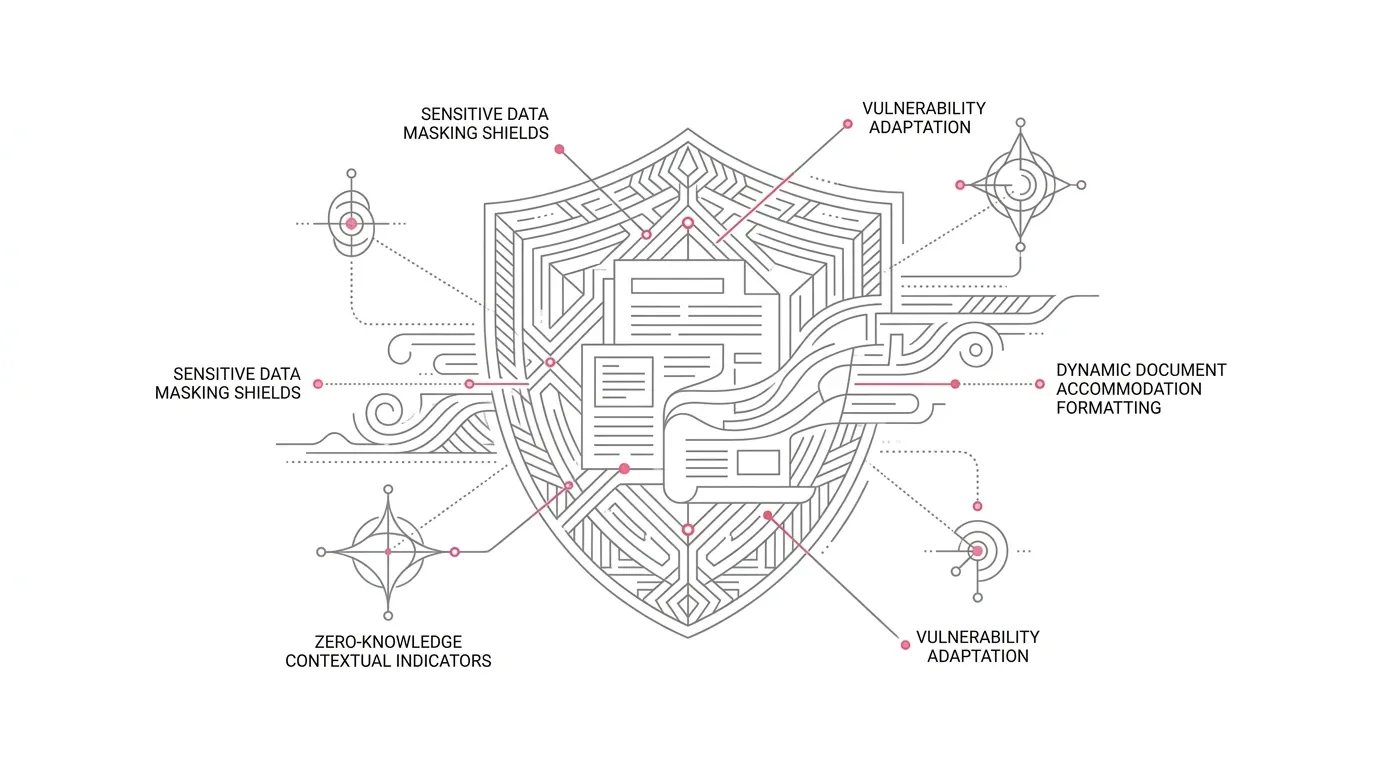
2. Design for the audience and context. Use plain language, visual hierarchy, layered summaries, relevant data, accessible structure and the right channel. Make vulnerability, language, device and product complexity explicit design inputs.
3. Test before release. Use representative customers, including relevant vulnerable cohorts. Combine qualitative read-back with comprehension questions and task completion. Compare alternatives when the risk warrants it.
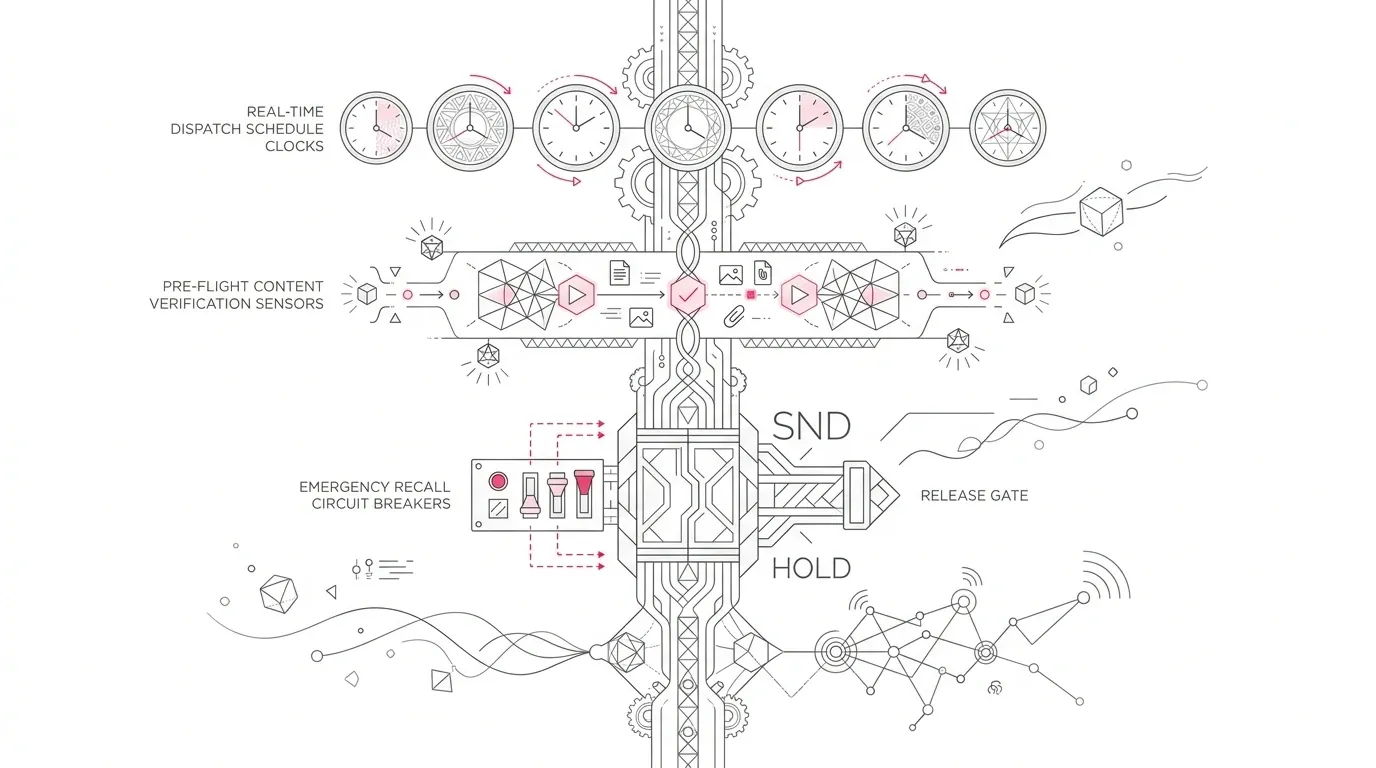
4. Govern the change. Record the evidence, proposed change, reviewer decision, approved version and release scope. A good idea without controlled publication is not an enterprise control.
5. Monitor after release. Join communication data with complaints, repeat contacts, drop-off, channel switching, assisted-service demand and outcome metrics. Segment the evidence so averages do not conceal harm.
6. Learn and repeat. Trace the signal to a content or journey change, publish it safely, measure again and preserve the decision history. The loop is complete only when the enterprise can show what improved.
What Changes Inside the Enterprise
A comprehension-assurance model changes ownership. Communications teams still shape language and design, but they cannot carry the outcome alone. Product owners define the decision the customer must make. Risk and compliance identify the harm created by misunderstanding. Accessibility and vulnerability specialists define representative needs. Customer service contributes evidence from calls, chats and repeat contacts. Data teams connect communication events to downstream behavior. Senior owners decide which gaps require intervention and whether the evidence is strong enough to release a change.
It also changes the metric hierarchy. Production measures such as volume, throughput, delivery success and cost remain important. Engagement measures such as opens and clicks add useful context. Neither layer demonstrates understanding. Enterprises need an outcome layer that can include correct recall of a deadline, recognition of a risk or exclusion, selection of the right next step, successful completion without avoidable support, and the absence of material gaps between customer cohorts. The right measure depends on the communication; a marketing message, a claim denial and a medication instruction should not share one universal score.
Finally, it changes the evidence architecture. The enterprise should be able to move from a live signal to the affected communication, audience, channel and approved version; from that diagnosis to the proposed wording or design change; and from the new release to a measured result. That does not require the CCM platform to own every research, contact-center or journey system. It does require clean integration, durable identifiers and enough governance to preserve the chain. Procurement should therefore score both native capability and the practical cost of assembling the complete loop.
Where Perfect Doc Studio Fits
PDS has several pieces that matter. Its current website describes a visual editor for business teams, smart templates that adapt to customer context, a workflow engine, multilingual generation, real-time communication analytics and a Template Optimizer that reviews templates for accessibility, compliance and readability. It also describes customer engagement analytics and REST-based integration. These are vendor claims, but they form a coherent starting architecture for designing relevant content and connecting it to enterprise data. [9]
The supporting knowledge base adds operational detail. PDS documents an Accessibility Validator with actionable suggestions and an Accessibility Preview, plus document-, block- and element-level summaries that may include variables. Its versioning workflow separates Draft, Testing and Published stages, with a Publisher decision before production. The platform also documents rule-driven content and linked channel transactions. This matters because comprehension work must survive personalization, accessibility, approval and delivery rather than exist as a detached writing exercise. [10] [11] [12] [13]
The credible PDS claim is therefore not “PDS proves customer understanding.” Public evidence does not establish that. The credible claim is that PDS brings important design, adaptation, accessibility, governance, delivery and analytics capabilities into a business-user-oriented environment, making it a serious candidate for the operating model enterprises now need.
A proof-of-value should validate the missing links: customer-panel or research integration, native A/B testing, configurable comprehension measures, cohort segmentation, linkage between live outcomes and exact content versions, and an exportable audit trail from insight to approved change. “Not verified” is not the same as “unavailable”; it is an invitation to test.
A Fair View of the Competitive Field
PDS is not entering an empty field. Messagepoint publishes particularly explicit capabilities for corpus-scale analysis, plain-language optimization, target reading levels, brand controls and channel-specific summaries. Smart Communications describes real-time block-level readability and sentiment analysis. OpenText publishes assisted authoring and broad orchestration and analytics capabilities. Quadient combines clarity-oriented AI claims with lifecycle governance, delivery and archival. These are credible reasons to include incumbents in an evaluation.
Analyst recognition and incumbent scale can reduce some forms of procurement uncertainty. They still do not answer the enterprise’s own outcome question. A platform can be broad, mature and highly rated while a particular communication remains misunderstood by a particular cohort. The missing buying criterion is not another universal winner table. It is a controlled scenario in which every vendor must improve the same high-risk communication and show the evidence chain.
Run the Evaluation Like an Outcome Experiment
Give shortlisted vendors the same starting material, representative data, audience profiles, approval policy and target outcome. Ask business users, not only vendor specialists, to complete the work. Then score the result across five dimensions:
- Speed and autonomy: Can authorized business users diagnose and improve the communication without specialist coding?
- Quality of adaptation: Can content, summaries, prominence and channel treatments vary safely by context and need?
- Evidence before release: Can teams attach or retrieve testing evidence and demonstrate accountable approval?
- Evidence after release: Can the enterprise connect live behavior and customer feedback to cohorts, variants and versions?
- Learning velocity: How quickly can insight become a governed change, and can the organization prove what happened next?
This test changes the center of gravity. Template breadth, channel count and production throughput remain necessary. They are no longer sufficient. The future CCM platform is not merely a factory for compliant outputs. It is part of an evidence system for helping people understand consequential information and act with confidence.
Why PDS Belongs on the Shortlist Now
PDS should not try to win this argument by pretending the evidence gap does not exist. It should win by inviting enterprises to test the gap directly. Its public proposition already connects business-user control, adaptive content, readability review, accessibility, summaries, approval, multilingual generation, integration and analytics. That combination is well aligned with a comprehension-assurance model and deserves close examination alongside larger, analyst-recognized platforms.
The buying risk is clear. Enterprises that evaluate CCM mainly through installed base, feature inventory and output volume risk optimizing for the category’s production past. Enterprises that add comprehension evidence can select for its customer-outcome future. PDS has earned the right to be tested against that future-facing standard.
Comparison Evidence
Scope: Current public vendor sources reviewed on 4–5 October 2026. “Not verified” means the reviewed sources did not establish the capability; it does not mean the capability is absent. All vendor statements require product demonstration, edition and deployment confirmation.
| Platform | Verified public strengths relevant to comprehension | Not verified in reviewed sources |
|---|---|---|
| Perfect Doc Studio | Visual business-user authoring; adaptive business rules; Template Optimizer for readability, compliance and accessibility; accessibility scoring, preview and summaries; Draft, Testing and Published workflow; multilingual generation; communication and engagement analytics. | Native customer-panel testing; A/B comprehension experiments; comprehension thresholds; cohort-level understanding dashboards; automated outcome-to-version traceability. |
| Messagepoint | MARCIE-assisted analysis and rewrites for reading level, plain language, sentiment and brand; corpus-scale insights; channel-specific summaries; public alignment claim to ISO plain-language principles. | Native recruitment or management of customer test panels; experimentally measured comprehension outcomes tied to exact released content and downstream behavior. |
| Smart Communications | Content Intelligence for real-time block-level readability, tone and sentiment; similarity analysis and reuse; broader platform spans communication, guided data collection, orchestration and archive. | Native comprehension testing with representative cohorts and a documented closed loop from customer evidence to approved content change. |
| OpenText Communications | AI-assisted authoring for clarity; published grammar, sentiment and reading-comprehension scoring; personalization, orchestration and analytics; approval and governance capabilities. | Native customer comprehension experiments, cohort-level understanding measures and one evidence chain linking intervention, version and measured outcome. |
| Quadient Inspire | AI claims for tone, clarity and consistency; connected data, content, approvals, delivery and archival; journey mapping and centralized governance. | Public detail on the scoring method; native customer comprehension studies; cohort outcome measurement tied to exact content versions. |
Executive Takeaway
Decision: Add comprehension assurance to the CCM scorecard and require a live proof. Readability, accessibility and delivery are necessary controls, but the enterprise should also be able to show that target customers understood the message, that weaker outcomes were visible by cohort, and that evidence drove a governed improvement. PDS belongs on the shortlist because its public capabilities cover many of the enabling layers in a business-user-oriented platform. Award no vendor the point until it demonstrates the closed loop with your data, users and risk thresholds.
Call to Action
Bring Perfect Doc Studio one communication your organization cannot afford to have misunderstood. Ask PDS to demonstrate how business users can adapt it by customer context, improve readability and accessibility, add concise summaries, route it through controlled approval, deliver it across relevant channels and connect performance evidence back to the next change. Evaluate the result against the same comprehension scenario used for every shortlisted platform. The future of CCM should be proven in customer understanding, not asserted in a feature list.